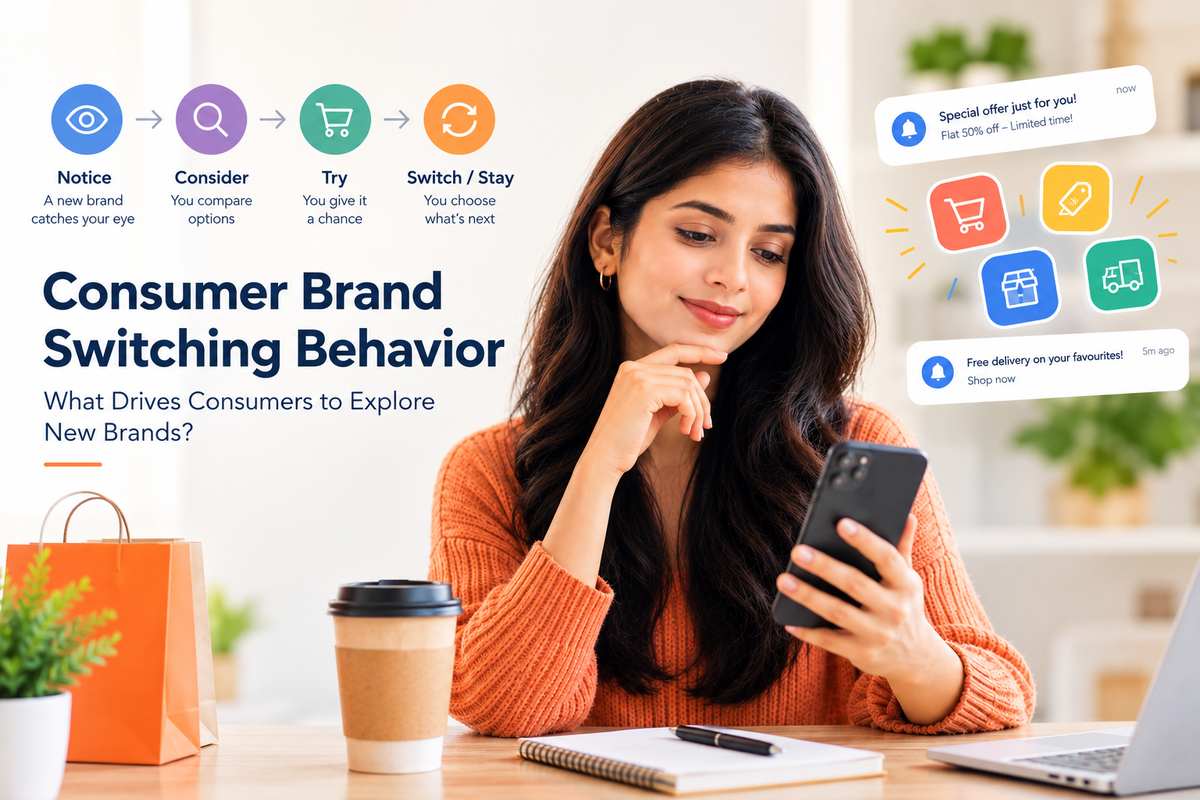
Ever wondered how, over time, we become so familiar with a brand that it feels like a natural part of our everyday choices? The coffee we order, the phone we use, the skincare we trust or the supermarket we return to can become habits we rarely question.
But then something changes. A new brand catches our attention. Maybe it offers better value, a product that fits our needs more closely, or simply gives us a reason to try something different. We may give it a chance without necessarily giving up the brand we already know.
That small shift is at the heart of consumer brand switching behavior. Why do consumers become curious about other brands? What makes them compare one option with another? And after trying something new, what influences the choice they make the next time?
Looking at these moments can reveal how consumers move from familiarity to exploration, trial and their next brand choice.
What Makes Consumers Try a New Brand?
Most consumers do not leave a familiar brand the moment they see another option. More often, they simply become open to trying something different.
That openness can come from changing needs, a better price, a new product or difficulty finding their usual choice. McKinsey’s State of the Consumer 2024 found that roughly half of consumers switched products or brands during pandemic-era supply disruptions. In advanced markets, more than a third have since tried different brands, while around 40% have switched retailers in search of better prices and discounts.
This shows why consumer brand switching behavior can begin with exploration rather than dissatisfaction. A new option may simply offer better value, greater relevance or a reason to reconsider the usual choice.
But trial does not always lead to a complete switch. In separate research among U.S. dairy consumers, McKinsey found that 41% had tried a new dairy brand in the previous 12 months. Of those, 24% fully switched, while 48% continued buying both brands.
That distinction matters. Trying something new opens the door, but the experience that follows can shape what consumers choose next.
What Influences Consumers’ Next Brand Choice?
Once a new brand enters the picture, consumers begin comparing it with what they already know. Is it better value? Does it offer better quality? Does it fit their needs more closely? These questions can shape consumer decision making when choosing brands.
Price is often part of the decision, but it rarely works alone. Quality, product performance, recommendations and how effectively a brand communicates its value can all influence which option feels more worthwhile.
A 2023 study published in the Journal of Retailing and Consumer Services examined brand choice through four key characteristics: price, quality, peer recommendations and marketing effectiveness. The research shows how these factors can work together in shaping the competitiveness of one brand against another.
This helps explain why factors influencing brand switching behavior are rarely reduced to a single trigger. A lower price may attract attention, for example, but perceived quality or a trusted recommendation may influence whether the alternative feels worth choosing.
Exploring another brand is only the beginning. What ultimately matters is how that option compares with the familiar choice when it is time to buy again.
What Consumers Learn After Trying a New Brand?
Once consumers move from considering a new brand to actually trying it, the decision becomes less about what they expect and more about what they experience. The first interaction gives them a chance to judge whether the brand delivers on the reason they considered it in the first place.
Did the product fit their needs? Was the experience convenient? Did it perform as expected? Small details like these can influence how consumers view the brand after the first purchase.
This is an important stage in consumer brand switching behavior because the trial creates new information. A brand may look appealing during the comparison stage, but the actual experience can either strengthen that interest or bring consumers back to a familiar choice.
In other words, trying a new brand does not automatically lead to a permanent switch. Consumers use the experience to reassess their options. A positive experience can make the new brand more relevant for future purchases, while a disappointing one can reinforce the value of what they were already using.
The first trial, therefore, becomes part of the next decision.
When Does Trying Become Switching?
Trying a new brand is not the same as switching to it. A consumer may experiment with another option, compare the experience with their usual choice and still go back to what they already know. A switch begins to take shape when the new brand gives them a stronger reason to choose it again.
This is what makes consumer brand switching behavior more nuanced. The decision may be influenced by better experience, greater convenience, changing needs or simply a stronger fit with what the consumer now values.
McKinsey’s research on consumer decision journeys highlights this distinction. Across the shopping-driven categories studied, 58% of consumers switched brands from one purchase cycle to the next, while 29% considered other options but ultimately returned to their existing brand.
Exploring an alternative, therefore, does not necessarily mean an established preference has disappeared. The real shift happens when a new brand moves beyond trial and earns a place in the consumer’s next purchase. When that choice begins to repeat, experimentation starts becoming a change in preference.
Why Consumers Return to Brands They Already Know
When a trial does not lead to a switch, consumers often return to the brand they were already using. That choice may seem simple, but it reflects something important about how people make repeat purchase decisions. The familiar option already comes with a known level of comfort, trust and expectation.
Consumers do not have to reassess everything each time they buy. They already know how the brand fits their needs, what the experience is likely to be and what they can expect from the product or service. Returning to it can therefore feel like the safer and easier decision, particularly when the new brand does not offer a strong enough reason to change.
This is why reasons consumers stay loyal to brands are not always about deep emotional attachment. Sometimes, consistency itself is valuable. A brand that continues to meet expectations can remain the preferred choice even when consumers are willing to explore alternatives.
For brands trying to attract switchers, this creates a bigger challenge. Getting consumers to try something new may open the door, but giving them a reason to leave behind an established choice requires more than generating curiosity. The new brand has to become meaningfully relevant to the consumer’s next decision.
What Makes Consumers Stay With a Brand Over Time?
Staying with a brand does not mean consumers stop noticing other options. In many categories, they continue to see new products, offers and alternatives. What keeps a brand in their regular choices is its ability to remain relevant when those alternatives appear.
That relevance is built over repeated decisions. A brand that consistently delivers what consumers value becomes easier to choose again. It may save them time, fit their routines, meet their expectations or continue to offer something that competing options do not. Over time, these small reasons can become a strong preference.
This is an important part of consumer preferences and brand loyalty. Loyalty is not necessarily about choosing the same brand regardless of what else is available. It can be a result of repeatedly finding that the familiar choice still works well enough to make switching unnecessary.
For brands, this changes the way customer retention should be viewed. Winning the first purchase matters, but so does giving consumers a reason to make the same choice again when the next opportunity comes. When that happens consistently, a brand moves from being one option among many to becoming part of the consumer’s consideration by default.
What Brands Need to Understand About Consumer Switching
For brands, the biggest takeaway is that switching is rarely a single moment. A consumer can notice a new brand, consider it, try it and even return to their usual choice before making a lasting change. Looking at only the final purchase can therefore miss the reasons behind the decision.
Understanding consumer decision making when choosing brands requires looking at the journey around that purchase. What first made the consumer consider another option? What did they compare? What did they experience during the trial? And what ultimately made them return, switch or continue with the new brand?
These questions can reveal different opportunities for brands. A brand may have strong awareness but struggle to convert consideration into trial. Another may attract plenty of first-time buyers but fail to give them a reason to return. Others may have loyal customers but face growing competition when consumer needs change.
This is why studying consumer brand switching behavior is not simply about finding out which brands consumers leave. It is about understanding the moments that move consumers from one choice to another, and identifying what a brand can do differently at each stage.
The more closely brands understand those moments, the better they can identify where they are losing consideration, trial or repeat choice.
What Brands Can Learn From the Moments Behind a Switch
A switch can look simple from the outside: a consumer bought one brand instead of another. But the decision behind that purchase can reveal much more. The important questions are often what happened before the switch, what changed for the consumer and what made the alternative worth considering.
For brands, these moments can uncover gaps that a sales figure alone cannot explain. A consumer may be attracted by a better price but leave because the product falls short of expectations. Another may switch because a competitor offers greater convenience, a feature that better fits a changing need or an experience that feels more relevant.
Looking at these moments can also show where a brand is losing consumers in the decision process. Are people noticing competitors but not considering them? Are they trying alternatives but not returning? Or are existing customers becoming more open to other brands because their needs have changed?
This makes understanding why consumers switch brands more useful than simply measuring how many have switched. The reasons behind each move can point to different actions, from improving the product experience to changing the value proposition or addressing a need that competitors are meeting better.
For brands, the real value lies in understanding not just who switched, but what happened at the point when another brand became the better choice.
Conclusion
Consumers rarely switch brands because of one isolated moment. A new option may catch their attention, but what happens next depends on how they compare it with what they already know, what they experience during the trial and whether it gives them a reason to choose differently.
That is what makes consumer brand switching behavior important to understand beyond the final purchase. A switch, a return to a familiar brand or a decision to continue with a new one can reveal changing needs, expectations and preferences.
For brands, the key is to understand what happens at these decision points. What attracts consumers, what creates hesitation and what ultimately moves them toward another choice can reveal opportunities that sales or retention numbers alone may not show.
In a market full of choices, staying relevant is not about stopping consumers from exploring. It is about continuing to give them a reason to choose your brand.
Discover what drives consumers to switch, stay loyal, try new brands, and make their next purchase.